

✨ Hey there - this is a free edition of next play’s newsletter. This is part of our series Should You Join, where we go behind the scenes on interesting companies. Our hope is that documenting these sorts of details, which never really make it to big publication press releases, can help you a) discover more interesting companies and b) inspire you to think creatively (for any of your own endeavors). You can join our private Slack community here and access $1000s of dollars of product discounts here.
In 1956, a young Hungarian man fled his country’s violent revolution. He escaped across the border to Austria and then boarded a ship to the United States, hoping for a better life.
In 1992, a teenage boy and his mother left a village outside Kyiv with little more than they could carry, fleeing the collapse of the Soviet Union. They settled in a small apartment in California.
In the mid-2000s, two brothers from a small village in Ireland got the idea to go chase their ambitions in the United States. They flew across the pond to attend MIT and Harvard.
Who are they? The Hungarian man was Andy Grove, who ended up running Intel during arguably its most successful era. The Ukrainian boy was Jan Koum, who co-founded WhatsApp. The Irish brothers were Patrick and John Collison, who co-founded Stripe.
But there is another way to answer that question: they are immigrants to the United States. And they are far from the only ones. Immigrants have founded the majority (55%) of America’s unicorn startups. This is to say nothing of the immigrant employees of those startups, who themselves have unlocked success for these companies. 80% of unicorns feature immigrants in key roles (leadership, product, management). These are people who have built lives in the United States; have themselves gone on to build things (like Eric Yuan, who founded Zoom).
Immigrants are foundational to American innovation and tech.
And, yet, if you are a startup founder or an employee looking to work in the United States, it has become extraordinarily difficult to realize your dream. There is no dedicated startup or founder visa. Recent changes to H1B visas make that path virtually unworkable for most startups. What’s left (O-1, EB-1, EB-2 NIW visas) can work on paper, but in practice are way too expensive and out of reach for exactly the kinds of people who need them most.
So who is fixing this? Who is giving great people a path to come to the United States, and who is giving companies the talent to bring great people in? This seems rather important.
The answer may be Manifest OS. Founded by Dan Mishin, an immigrant himself, Manifest is taking a new approach to immigration that turns the standard predatory law firm business model on its head and makes immigration significantly more feasible for great people everywhere.

The problem
Imagine you are a founder (or recruiting person) at a startup and you’d like to bring in some talented people from abroad. If this is you, your experience might look something like this:
You realize the visas in play (O-1, EB-1, EB-2 NIW) are complex and hard to get.
Most firms don’t care about your business and won’t reply for weeks.
The firms that do reply don’t give you a firm commitment on cost or timeline.
The big, ‘reputable’ firms charge insane amounts. Like $1,000 per hour (or more).
The smaller firms and independent lawyers are expensive, too, and hard to vet.
It ends up becoming so much friction on your side to sponsor somebody that you end up deciding to exclude the immigrant pool altogether. Of course, this is not ideal: immigrants have been, and continue to be, extremely important for American startups. But what can you do?
(The same is true, by the way, if you are a founder trying to enter the United States to start a company; you deal with all of the problems I just described above. A mess.)
But let’s say you get lucky. Say a promising firm does reply and you decide to work with them. If this happens, welcome to the frustrating world of:
Insane hourly bills (you have no idea when it will end).
Slow email responses (sometimes you follow up 2, 3, 4 times).
Unclear communication (“Sure, I’ll get back to you on this”).
No clarity on where things are in the process (even many months into the process).
No idea what will happen if it fails (is all my money just gone?).
This is basically a nightmare; talk to anyone who has been through this process and, unless they were very lucky, they will repeat all of the same pain points. Immigration law is a mess.
The current model tends to work for law firms, which often have more demand than they can service and don’t face differentiated competition. The partners of these law firms reap the profits of their hourly billing, of your complicated case, of your stress. These profits rarely ever get distributed back into the business—because why would they? The model works.
Well. The model works for them. The law firms. The partners. It does not, however, work for you. Manifest is changing all of this with an honest, outcomes-focused model for law.
The product
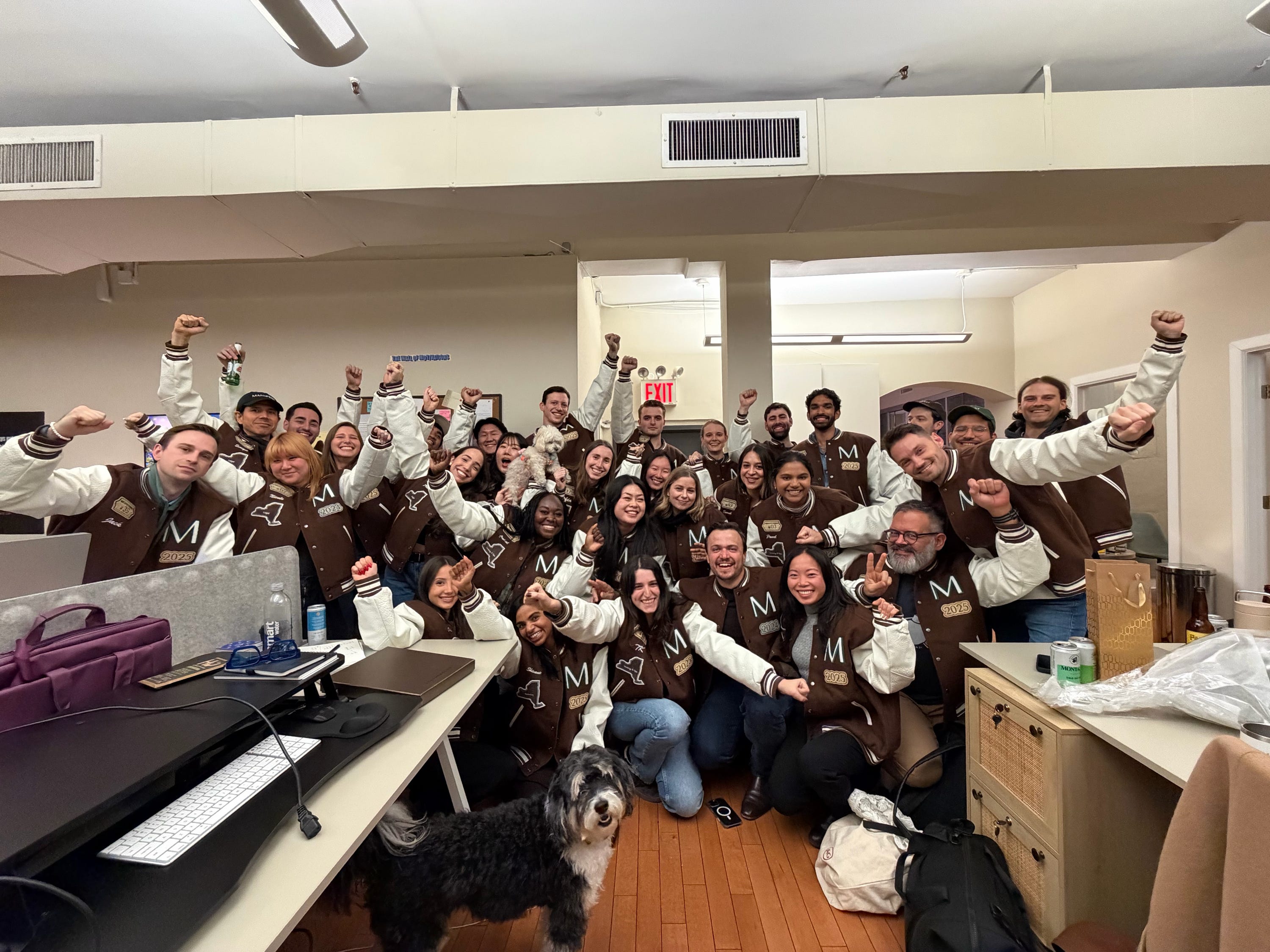
Manifest is two companies that operate in tandem. The first company is Manifest OS, a NYC-based tech company that builds software, owns the brand, and runs a centralized back office. The second is Manifest Law, an actual law firm. Manifest OS powers Manifest Law.
This structure matters a lot. Most legal AI startups today sell software to existing law firms, the idea being that AI can make those firms more efficient. But Manifest doesn’t do this; founder Dan Mishin told me that “selling AI to law firms can’t fix the problem. $6B went into legal tech last year, most of it toward tools that make the existing law firm model more profitable without changing whose interests it serves.”
So, instead of selling AI to law firms, Manifest built its own.
They partner with elite, hand-picked attorneys (the acceptance rate is <1%). Those attorneys join the platform and only do one thing: practice law. Everything else, from intake to document collection to drafting to billing to operations, is handled by Manifest OS. The lawyer focuses on the legal work while Manifest handles the rest. And so, if you are an individual or a company who wants immigration help, the experience looks like this:
You meet your attorney.
You get a flat-fee quote for the outcome (not the hours).
You get a single dashboard showing exactly where your case is, what the steps are, and who is doing what. When you reach out, people respond fast (and helpfully).
If your case is denied, you could get a partial or full refund.
It is in many ways the antithesis to the way most law firms today work, even the fancy ones. It’s the way that, if you were a normal person designing the ideal way for a business like this to work, you would probably design it. It’s the way many other parts of our economy work: identify an outcome you want, pay for it, and get as much support as you need along the way. Why can’t law be this way? With Manifest, it seems as though it can.
Oh, and it works. Manifest Law’s visa approval rate runs higher than the USCIS national average for EB-1 and O-1 cases. They have already done this work for thousands of individual clients and across more than 150 corporate immigration programs (including companies like Whop and Orchard Robotics). The engine is on and it is humming.
The strategy
Solving immigration law is wonderful (and perhaps relevant to some of you reading), but I suspect it isn’t the only reason Manifest OS recently raised $60M from Menlo Ventures, Kleiner Perkins, First Round Capital, Quiet Capital, and others.

Surely there is a big long-term vision, then? I asked Dan Mishin, founder and CEO of Manifest OS. He said the goal is to provide “a trusted global platform powering hundreds of AI-native law firms delivering best-in-class legal services across every major practice area.”
Immigration was the logical place to start because it was a problem the Manifest team knew inside out; Dan himself went through all the broken pieces of the US immigration system. Manifest is already delivering thousands of positive outcomes in immigration, and there is still plenty of room to grow. They have probably not even achieved five percent of what is ultimately possible with immigration in the United States. The ceiling is high even with the current scope.
But, if things go well, Manifest will go global. They will expand outside of immigration law. They will become the most recognizable brand in law on the planet. Because their outcomes-based, AI-driven model makes law more accessible, there will be net new demand for all kinds of legal advice. Anyone with a problem of almost any scope will be told, by a friend or a colleague, “oh, you can just go talk to the people at Manifest.”
So how do they get there? A few things likely need to happen.
One, Manifest has to become (or remain) the best place in the world for elite lawyers to run their practice. Manifest lawyers are great today, and for the business to really win, its lawyers need to continue to be great in the future. The good news is that I think the Manifest pitch is quite appealing for lawyers. You join Manifest, you only practice law (no admin, billing, business development, lead gen), and you get a bunch of tools that make you faster and better. Menlo’s Croom Beatty, an investor in Manifest, compared it to Uber: “just as Uber created more supply by increasing the number of drivers on the road, Manifest uses AI to dramatically increase the throughput and productivity of existing lawyers.” I think most lawyers like that pitch.
Two, the model needs to continue working as Manifest moves into new practice areas. There is plenty of reason for optimism here: most legal practice areas suffer from the same broken model that immigration does. If Manifest can make its model work in those other areas, it wins.
Three, Manifest OS needs to keep building great software that makes the whole thing defensible; the tools that differentiate Manifest lawyers from others. This is where “operate the service, don’t just sell the software” pays off. Most legal companies sell tools to law firms and never see how those tools get used. But Manifest operates the service. This means every single case makes the product better, and every product improvement makes the next case faster. As Dan puts it, “Most legal AI companies are selling shovels; Manifest OS is mining.”
There are early signs all of this is working. Manifest has 3,000+ clients, 100+ attorneys, and has worked with more than 150 corporate immigration programs. They just raised a $60M Series A at a $750M valuation from some of the best investors in the world.
Manifest is still a young company, but it appears to be well on its way to building something that changes all of law: a unified brand sitting on top of hundreds of practices, all AI-native, all sharing the same back office, all delivering the same exceptional experience around the world.

What to do with this information
Manifest is an interesting company solving a serious problem in a new way; that’s part of why I’m writing about them. There’s one world where you read this and simply update your priors about immigration law (or all law, for that matter). You’re now aware of this new, ambitious model and approach to the space. That may be enough.
But I do think, for certain people, there are more practical steps you could take.
If you are a founder (or employee, or someone who wants to live and/or work in the US), you could try out Manifest Law’s services for yourself. If you work at a company that has a corporate immigration program and/or wants to bring people in from overseas, you could also have a look. If the model and the product is as good as outside indications make it seem, it might be prudent to at minimum book a consultation and learn more.
Manifest is also hosting a webinar on Tuesday, May 26th from 1–2pm Eastern on visa options for founders and startups. Whether you’re building something of your own or trying to make the jump from a bigger company into the startup world, they’ll cover the paths that actually matter. You can sign up here.
Finally, if you are interested in what Manifest is building and would like to help them build it, you can look at Manifest OS’s open roles here. They’re hiring for their SF and NYC offices.
Thanks to Manifest for supporting Next Play and making this Spotlight possible.
Useful lens for founders and operators reading this from the applicant side: a better legal operating model helps, but the record still has to be legible before any firm can move fast.
For EB1A, I would keep one evidence map before choosing a law firm, platform, or DIY package:
- exact field of expertise
- criteria you can actually prove
- independent proof for each claim
- source, date, and exhibit label
- why the proof shows field-level impact
- likely officer objection
- what is missing before filing
That gives a flat-fee or outcome-based provider a cleaner starting point. It also protects the applicant if they switch counsel, get an RFE, or discover late that the profile has proof gaps rather than drafting gaps.
I put the smallest version of that check here:
https://chateb1.com/products/evidence-gap-audit/?utm_source=substack&utm_medium=comment&utm_campaign=manifest_os_evidence_gap_audit_20260704&utm_content=law_firm_operating_model_comment