

Meet the startup building the operating system for America’s best grocery stores
Vori is building software for one of the most underserved industries on earth: grocery stores.
✨ Hey there this is a free edition of next play’s newsletter, where we share under-the-radar opportunities to help you figure out what’s next in your journey. Join our private Slack community here and access $1000s of dollars of product discounts here.
Seven years ago, Brandon Hill’s parents came home with a stack of wholesale catalogues; thick papery booklets listing every product a grocery store could order.
“Wow,” Brandon said, curious, “Is this how they used to place orders back in the day?”
“No,” his father replied. “This is what they do TODAY.”
So began Brandon’s (and then co-founders Tre Kirkman’s and Robert Pinkerton’s) journey towards founding Vori: the startup building a modern operating system for grocery stores. Because although not every grocery store is still placing orders via paper catalogues, existing software is hardly better. “The grocery industry is one of the most under-digitized industries on earth,” Brandon said.
It is a nonobvious place to build. Maybe today is the first time you are reading the phrase ‘grocery store startup’. But the problem is real, the market is massive, and Vori already has encouraging traction:
Processed $350M+ in payment volume in 2025
Revenue scaling 5x year-over-year
Generated $22M+ in incremental sales for independent grocers in 2025
577K+ supplier cost changes auto-detected by Vori AI, protecting retail margins
Launched in 55 new cities in 2025, now operating coast-to-coast
Customers (incl. Mollie Stone’s Markets) have become investors
(Go watch this video if you want to see a visual recap of Vori’s progress so far.)

Most startups you hear about are helping theoretical people you will never be on theoretical problems you will never experience yourself. Vori, on the other hand, is aiming to transform something that every single person reading this is familiar with: going to the grocery store.
What does the market look like? What is Vori’s plan for success? And should you join now?

Arming the rebels
Running a grocery store is a harder job than you might think. If you are a company like Amazon (which owns Whole Foods) or Walmart, you can smooth over some of that difficulty with billions of dollars that you use to build your own back-office teams and develop your own internal software.
But if you are an independent grocer—not a national behemoth—then you are in a tricky situation. You have to do all the same things Amazon does (ordering, sales, accounting, inventory management, etc.), and you have to compete with the big boys, but you have only a fraction of the resources.
So what do you do? Well, in the past, the best answer might have been: “suffer.”
Growing up, Brandon Hill (Vori’s CEO) watched both of his parents in the industry deal with systems that were built in the ‘90s and probably should have stayed there. If you run a grocery store today, there is no great operating system you can use. There is no Stripe, no Shopify. You are out there on your own.
And being out on your own is not a recipe for success. Especially when, as Brandon told me, “wages have stagnated, margins have compressed, and scale retailers [like Walmart] wield a significant pricing and technology advantage. At the same time, the industry is undergoing a massive intergenerational transfer of ownership: thousands of owners are handing the keys to a next generation that doesn’t want to run a business on paper, fax machines, and tribal knowledge.”
You often hear startup founders talk about ‘underserved industries’ that are ‘ripe for innovation.’ When you see ten different startups in the same industry building same-y products for that ‘underserved’ market, though, you start to wonder: is it really underserved? Or is this just to farm goodwill with investors?
Here with grocery, it feels as though Brandon, Tre, and Robert have encountered a market that is the kind of underserved, prime-for-disruption market that so many startup founders say they are attacking.
And starting with the $350B independent grocery industry is a carefully-calculated decision.
Bear hugs in the aisle
If Vori is successful, co-founder Tre Kirkman told me, the company will become “the clearing house for the global food supply chain. Every basket from Oakland to Auckland will be powered by Vori.”
That’s ambitious. But you have to start somewhere, and Vori started where it made the most sense: by building reordering software for independent grocers. Reordering software because it is one of the more tedious (and important!) things a grocer needs to do; independent grocers because they have fewer embedded systems and lower inertia preventing a switch to new software. (Also because, as it has become clear, the Vori team has a real passion for great independent grocers.)
Over time, Vori has built out their software into a full operating system for grocery stores: POS, payments, back office, price changes, and more; an operating system that has now facilitated more than $350M in payments and generated more than $22M in incremental sales for independent grocers in 2025.
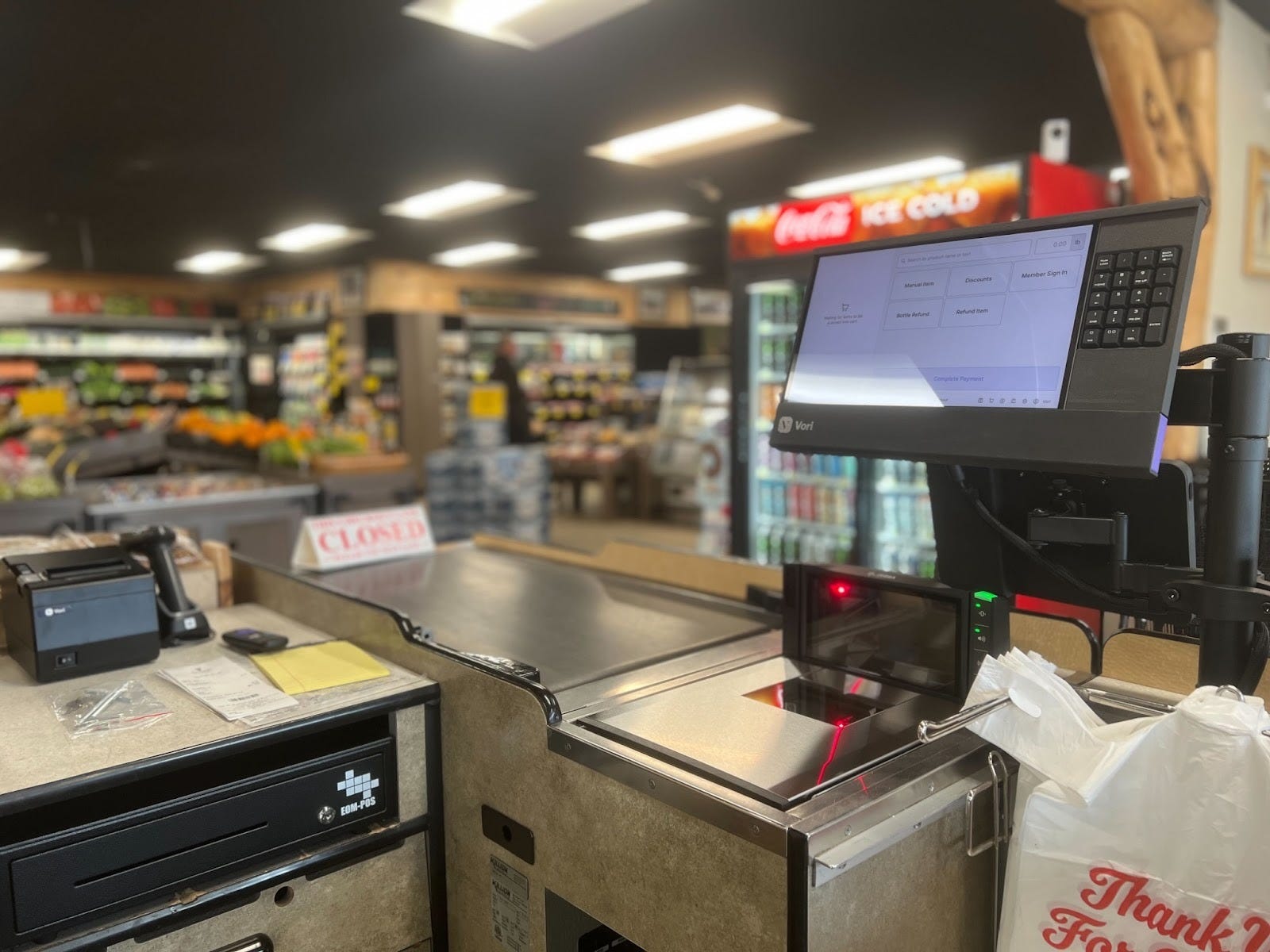
Vori is an AI-native OS; the company is building solutions (actually useful ones!) with AI to let stores run on “full self-driving mode,” Brandon said. This is not a requirement—stores are not forced to give up the reins to AI—but the products are effective. To date, more than 577,000 supplier cost changes have been auto-detected by AI to protect retail margins for grocers. This is perhaps one of the few examples of AI tools in the market today where there is an obvious line between using the AI and increasing profit.
Then there are the intangibles. “Jaime, the dairy clerk at the Market at Edgewood, gave [co-founder] Rob a massive bear hug in the dairy aisle where he gave [Vori] a test drive. ‘I have goose bumps,’ he told us. This is when we realized the potential for life-changing impact,” Brandon said.
“The founders are close-knit and supportive of one another,” Klaire Korver, growth marketing lead, told me. All three are Stanford graduates. Brandon and Tre launched YC-backed social app Greo in 2017; Robert was building rockets at SpaceX and working on Lyft’s first fleet of self-driving cars.
Move fast, don’t break things
I do not think I have talked to a more grocery-obsessed group of people than the team at Vori. This is a group of people that cares deeply about grocery stores, about what they mean, about the value of independent grocery stores, about the problems grocery store owners face daily.
Vori is “customer-centric in a very literal way. Slack is full of customer conversation recaps — install learnings, post-live feedback. These stories directly fuel what we prioritize and what we build next.”

If you can’t empathize with the plight of the independent grocery store, well, I’m not sure if Vori will be a fit for you. You need to love (or be able to love) grocery stores and their importance. They are the customer!
“One of our core values,” Engineering Manager Clinton Blackburn told me, “is don’t mess with the dairy order. You mess that up and you’ve ruined a shopper’s visit to the store and potentially lost their trust. We move fast, but don’t break things because we know that the things we might break can ruin a business and someone’s livelihood. We keep this in mind with everything we do.”
It stood out to me just how emphatic people at Vori were about the no-politics culture. “I’ve worked in tech for 13 years across seed through public companies… And Vori is the least political company that I’ve ever worked at. Everyone’s ideas are valued,” Klaire Korver said.
“I don’t feel that there are any company politics to deal with here,” someone else told me. “Everyone is approachable and motivated and there’s no sense of work being above or below someone’s paygrade.”
This low-drama approach to things means that anyone—even a brand new junior hire—can make a big impact at Vori. “Titles aren’t a big thing here,” someone said. “Flat structure / real ownership. Everyone has meaningful scope, and that’s what motivates people.”
People work the hours they need to; some people told me they worked 8 or 9 per day, while Clinton Blackburn told me he works 12. “Did I mention I need more engineers to spread the workload?”
Should you join Vori?
We’ve established that you should care about grocery stores. But that’s easy enough to do by simply paying more attention the next time you shop. People 150 years ago had none of this.
Why else should you consider joining?
Jesse Lopez, Head of Product Marketing, had thoughts: “Over my career I’ve come to learn that what you do is really only 15-20% of what makes for an enjoyable job. Certainly, you want your work to be engaging and impactful, but in reality, who you work with, and how you work together, contributes way more to your enjoyment of a role. Now that we’re expanding our team, we often talk about carving out the most interesting work for our new joiners. Better to give the exciting new projects to the new hires so they can be easily engaged while they build rapport with their teammates.”
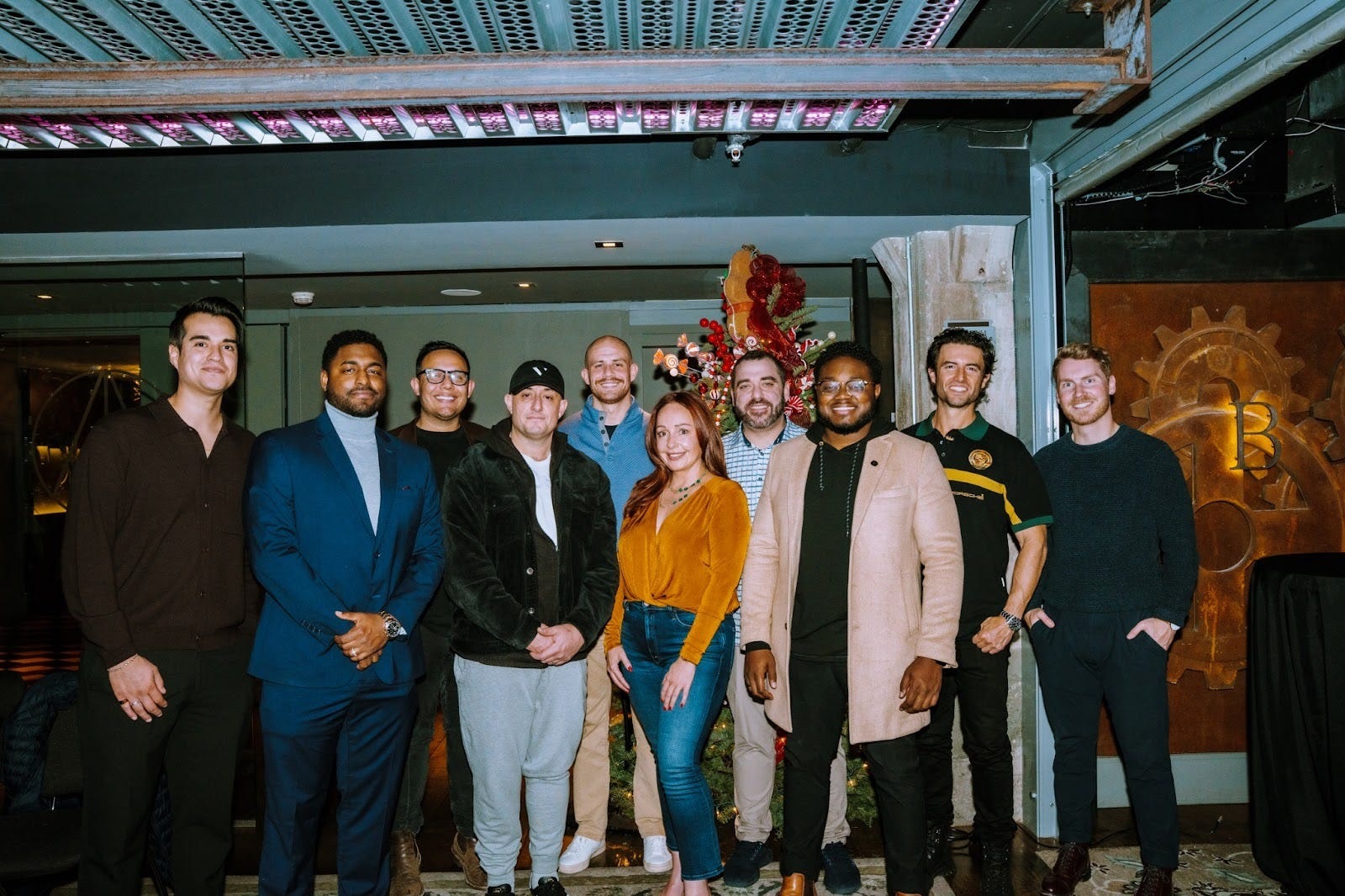
People who do best at Vori tend to be “highly curious, high ownership, customer-obsessed, and low ego. The last one is really important. We like to live by the proverb ‘If you want to go fast go alone, if you want to go far, go together.”
There is also the equity and growth trajectory perspective. Vori is growing fast, and it would not be surprising to see a Series B sooner than later (and then a C not long after that, if all goes well). This is a stage at which you can still get pretty meaningful equity (that could end up being very valuable if Vori ends up succeeding long-term). This is also a stage where you can make a big impact—your individual decisions could help shape the company’s direction—and be part of the reason Vori wins.
Vori is hiring across engineering, sales, marketing, design—just about everything. If the company sounds interesting, give them a closer look. And if you do reach out, you could try being unconventional: “We are down,” Brandon told me. “Shows creative hustle.”
Thank you to Vori for supporting Next Play and making this Spotlight possible.
Love a retail helper! Thanks for sharing about Vori - checking them out.