

Should you join: Cara
A deep dive on the company turning insurance labor into software
✨ Hey there - this is a free edition of next play’s newsletter. This is part of our series Should You Join, where we go behind the scenes on interesting companies. Our hope is that documenting these sorts of details, which never really make it to big publication press releases, can help you a) discover more interesting opportunities and b) inspire you to think creatively (for any of your own endeavors). You can join our private Slack community here and access $1000s of dollars of product discounts here.
There is a whole category of companies that turned an internal tool into their main product. The classic one is Amazon, that once-niche online bookstore that ended up making their infrastructure a pretty big deal. You may have also heard that Slack started out as an internal comms tool in a then-indie game studio called Tiny Speck.
But you may not have heard of Cara, the company we are writing about today. That’s probably because Cara is rather early (they aren’t Slack or Amazon, yet). Their story, however, follows a similar blueprint. Founders Vic Yeh (ex-Blend), Nikhil Kansal (ex-Stripe) and Jon Patel (formerly at the strategy wing of PwC) spent their pre-Cara years building an insurance brokerage called Oyster. In the process, they began developing software to automate all of the tedious parts of insurance so everyone at the company could bring in more revenue.
Business was good. The software helped. And in April of 2025, the three co-founders sold their brokerage to The McGowan Companies, one of the largest insurance companies in the United States. Just one year later, the co-founders announced their $8M seed round for Cara: the AI platform for insurance brokerages. Built by insurance agents, for insurance agents.
That’s a grand pitch. But unless you are already in the space, it may be unclear what sort of opportunity Cara has (and why it would be exciting). What’s wrong with insurance? What is Cara doing? Why do they believe they’re positioned to win? And should you join?
I researched and sat down with the Cara team to give you answers to these questions and more. Over the course of this essay, I hope you’ll gather a clear picture about what Cara is building and why it could be worth spending the next phase of your career on.
The product
An insurance professional working at an insurance brokerage spends most of their time working on tasks that do not increase revenue. Most of their daily work—operational sales and servicing workflows tied to insurance policies the brokerage has sold—is highly manual. By Cara’s estimate, this work alone takes up to 70 percent of most agents’ days.
This manual work involves doing things like:
Collecting information and completing insurance applications
Creating quote proposals for presentation
Placing a risk profile with the right carrier
Issuing certificates of insurance
Processing policy changes and renewals
Policy checking to verify coverage and compliance
Updating records in the AMS (agency management system) and CRM, systems of record used by agencies and brokerages
These are incredibly important for the business to function. But if you are running an insurance brokerage, of course you do not want your employees to be mostly spending time on manual and time-consuming tasks. You’d rather have them focusing on work that grows the business: selling new policies, advising clients, and improving relationships. Those are the places where a human touch really matters.
Cara solves this problem by automating all of the tedious manual work for insurance agents so they can focus on that more important work. The core of Cara’s platform today is automating the sales, servicing, and operational workflows outlined above: proposal generation, policy comparison and checking, certificates of insurance, ACORD forms, policy changes, routine calls and emails. Brokerages can customize workflows based on the core platform capabilities to fit their unique operational needs.
For insurance agents, life with Cara means a completely different kind of workday. Stuff that took hours in the past can now happen in minutes; agencies using Cara save 10-plus hours per employee per week on average. As an example: one of Cara’s customers, HH Insurance, has seen a 50 percent reduction in routine servicing reviews since adopting the platform. Furthermore, enterprise agencies, such as Valley Insurance Agency Alliance, are rolling out Cara across every member enterprise-wide, enabling every employee to shift toward higher-leverage work and relationship building.
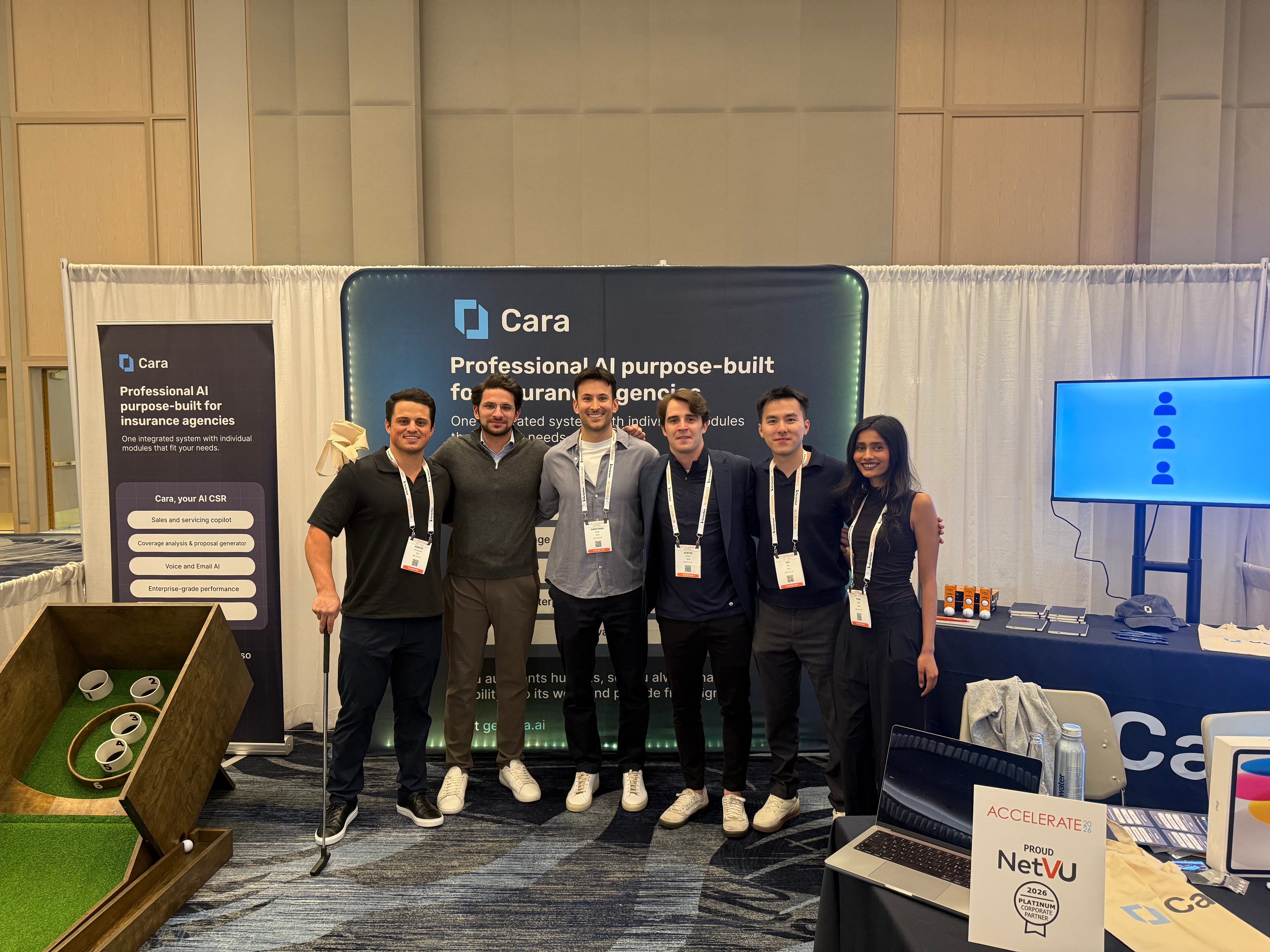
Cara is good for the insurance agent, who did not particularly enjoy working long hours (overtime is common in insurance!) doing tedious manual work. It’s also good for the business, which is now able to grow faster and spend its human hours doing things humans do best.
“Our goal is to encompass entire workflows within the Cara platform,” Christopher Gosselin, Cara’s Head of Product, told me. “Cara does [more than] what several point solutions might do together.”
The strategy
Talented startup founders disrupting an unsexy industry is sort of becoming a tale as old as time in startupland. And so, seemingly, is: talented startup founders underestimating what it takes to actually be useful in that unsexy industry. Not all of these ventures are created equal, and the team at Cara has a few strong opinions about what sets them apart.
One of the big themes Vic, Cara co-founder and CEO, touched on was their human-first thesis. “The prevailing view is that AI will replace insurance agents, which is reflected in the capital flowing into AI-native brokerages, carriers, and roll-up strategies. We believe that view misunderstands the unique nature of insurance.” The reality, Vic said, is that insurance is a “highly regulated, relationship-driven industry with complex products, long-tail risks, and nuanced purchasing behavior that often requires human judgement and trust.”
In other words: humans matter and AI isn’t going to completely replace them. So instead of building software to replace human insurance agents, Cara is building software to empower them to be more effective at their jobs; a mission the product seemingly achieves.
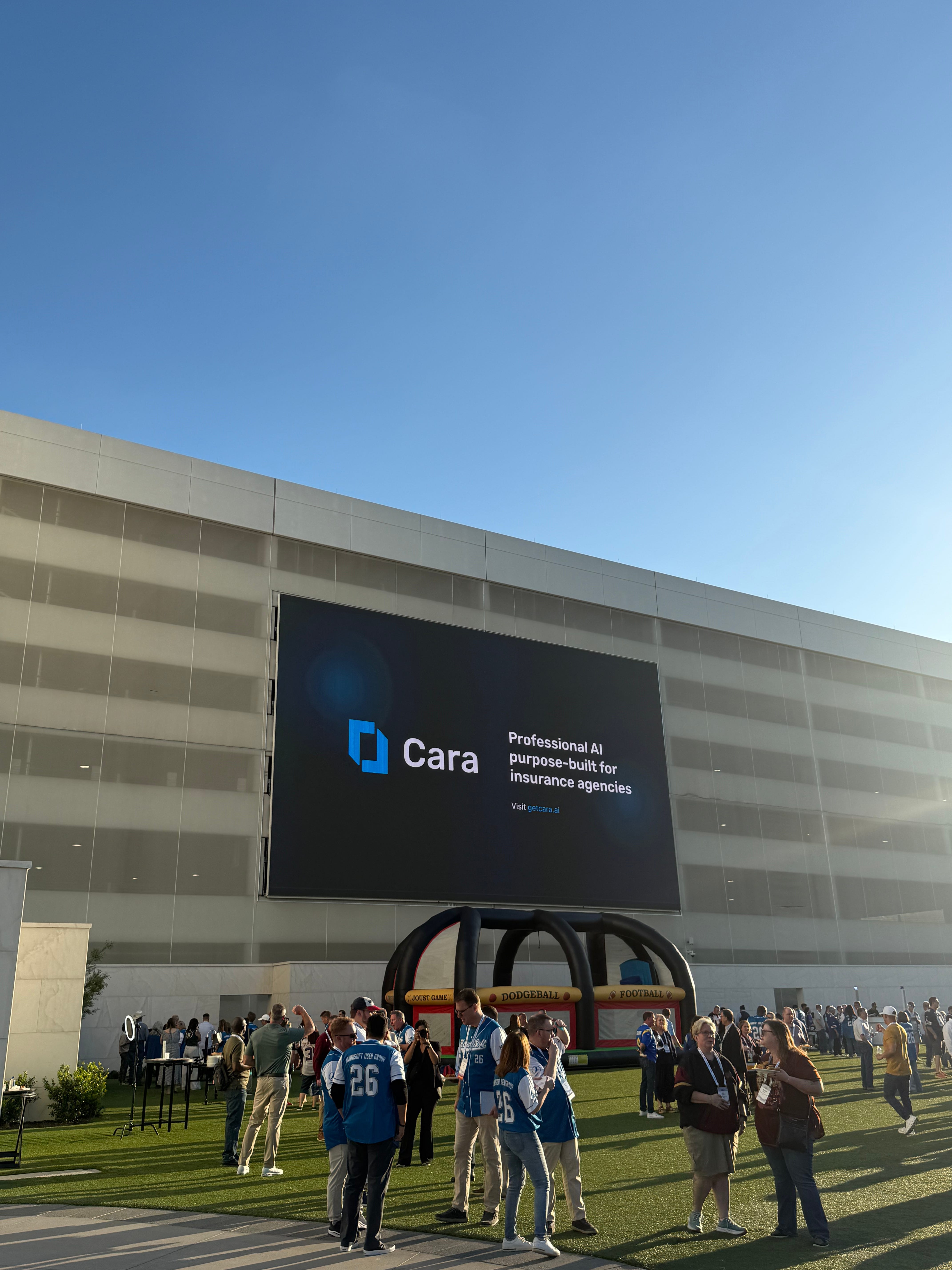
A huge part of the reason Cara arrived at this human-first approach is their own experience in the industry, another piece that sets them apart from some of their competition. “The team deeply understands the needs of insurance agencies and brokerages,” Simone Singh, Cara’s founding marketer, told me. “So many people here have actually worked in the industry or built alongside it.” The team at Cara knows what it’s like to run an insurance brokerage because they’ve done it before.
The ‘AI automation for [industry]’ market is hot now; the Cara team knows it. But Cara “is the only AI platform built by insurance agents, for insurance agents,” Vic said. “Our founders and early team combine deep insurance expertise with world-class engineering talent, enabling us to deliver a product that consistently raises the bar for the industry.”
And while Cara’s pitch today is fairly straightforward—they automate lots of manual work for brokers—the future is bigger. If the company succeeds, then in 20 years Cara will be the “connective AI tissue for the insurance industry,” Vic said. Every single insurance policy is a chain of hand-offs between agencies, wholesalers, and carriers; each of those hand-offs today is a human retyping the same information into another system. If all of that runs through Cara, it could become the pipe that the whole industry’s work flows through.
The growth
When I asked Vic what growth stats he could share, he replied with two:
60x ARR growth year-over-year.
Current ARR well into the millions.
This is exactly the sort of traction you’d like to see if you were underwriting Cara as a potential early-stage startup to consider joining. Better yet, much of this growth has not been powered via hyper-expensive paid acquisition (or similar) but by word of mouth. Approximately 80% of customers so far have come through connections and referrals, Vic said, which is encouraging and independently validates all of Cara’s claims that they know the industry.
Customers are brought on board, enjoy the product, refer it to other companies, who then come on board and also enjoy the product, who then refer to other companies… It’s a nice way to grow. Today, Cara is used by hundreds of brokerages and thousands of agents.
It’s still early—you won’t (usually) see a later-stage startup be able to claim something like 60x YoY growth—but it’s precisely the kind of thing that might get you excited about joining.
The culture
Having spoken with people on the team, it feels like the way of working at Cara is intense, honest, no hype, no frills, and with a judicious, high-leverage use of AI compared to a lot of the startups you might consider working for.
“We don’t create hype,” one software engineer told me. “We don’t outsource our judgement. We don’t vibecode everything and ship blindly. Every PR gets careful human review. And we know the difference between scrappy and sloppy. We move with clarity, so we don’t need to manufacture artificial urgency to be productive.”
People at Cara seem to spend lots of time deciding what and how to build something before actually building it. There’s no “tokenmaxxing,” as Cara’s founding engineer Balaji called it. “We spend time up front figuring out what to build so we can sprint to building something high-quality, robust, and within a tight deadline. We use AI to write code, not make product and engineering decisions, which can be slower in the short term,” Balaji admitted, but “maximizes the long-term outcome for our company and our customers.”
Insurance is a complex industry with lots of regulations; it’s also an industry where getting it wrong (e.g. shipping a lazy vibecoded feature that makes a mistake) can cost time, money, and reputation. I get the sense that Cara has a deep respect for their customers and their customers’ time, and their approach to product-building reflects that.
As for hours, the work is as intense as you might expect at an early-stage startup but “we have the flexibility to choose when we work as long as we hit deadlines,” Balaji said. This may sound obvious but there are plenty of seed-stage startups out there that expect to see you working 12+ hours a day, 6 or 7 days per week, in the office whether or not it’s a productive use of time. So if you’re interested in joining an earlier-stage startup with a culture of relentless execution, a high engineering bar, and a deep product focus, Cara’s culture may be a fit for you.
There’s also a lot of trust. “The founders believe in letting experts be experts,” Christopher Gosselin, Head of Product, said. “Typically, high quality work is gated around fiefdoms, opinions, and old processes, but at Cara we take purposeful balance to unlock each individual’s potential. On a personal note, I have developed more in a couple years than I have in [5+ years] prior at other jobs because I had real room to learn.”
Should you join Cara?
It’s possible to have read this essay up until this point and to have convinced yourself that you need to be really obsessed with insurance for Cara to be a good fit for you. I think that may be a bad takeaway. Insurance does not need to be the great joy of your life for you to fit in at Cara; rather, I think you should care about solving important problems that affect real people (in this case it’s insurance brokers and, ultimately, policyholders). Cara’s product makes the life of an insurance broker materially better on day one. If you can get behind that idea, if solving real problems in the real world sounds good, then you may be a fit. Insurance is a trillion-dollar market globally, and you’d be at the forefront of pushing the boundaries of AI in this critical sector.
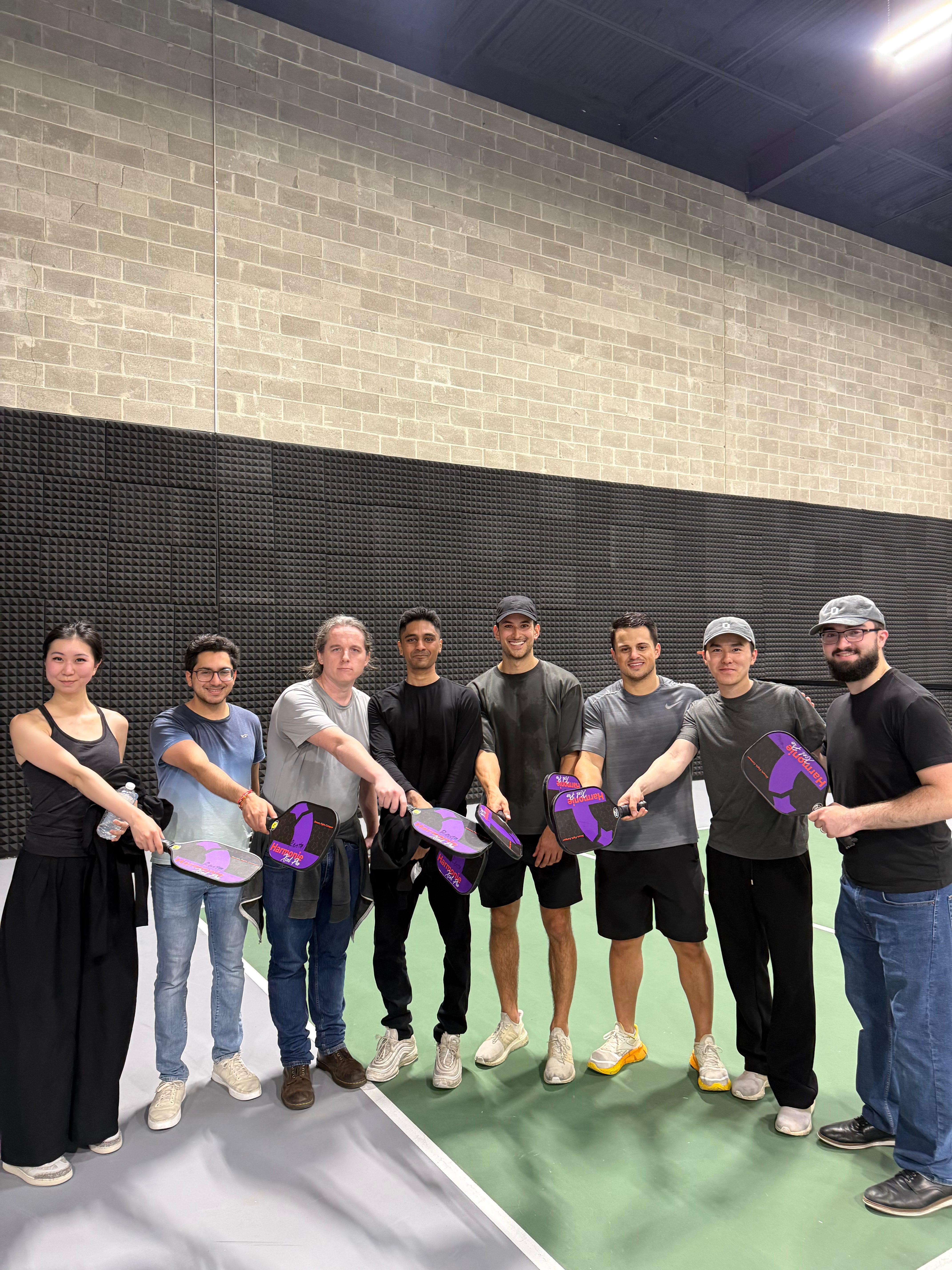
“We hire for talent with spikes,” Vic said. “The people who excel at Cara tend to demonstrate exceptional ability in a specific function - whether that’s closing complex deals, designing scalable systems, or conducting rigorous research.”
You may also be a good fit at Cara if you aren’t the most ‘AI-pilled’ person on the planet. Yes, Cara is literally building an AI product, but they’re not building it “for the sake of AI,” Cara’s founding marketer said. “It’s a team building for a real industry, with real operational pain points, and a customer base that clearly needed better tools.” The culture isn’t overly AI-heavy, either (e.g. no AI code reviews and an intentional approach to shipping).
Of course, you might also join on the fundamentals. Cara is a well-funded seed stage startup that already has millions in revenue. The trajectory is good, and you’d be joining early.
Now, who shouldn’t join? “I [can think of] people who might want to go work on things that may get more stars on GitHub or get to the top of Hacker News,” Cara’s founding engineer said. “I understand how working on ‘cool’ things is validating.” The kind of validation you get at Cara, though, is less from going viral on Hacker News and more from customers saying thank you.
If you do want to apply, Cara is hiring across most departments in New York and San Francisco, including for one rather unique “forward-deployed broker” role. When I asked Vic whether he liked non-traditional applications (like cold emails and sample projects), he said yes. You can check out Cara’s open roles here.
Thanks to Cara for supporting Next Play and making this essay possible.
Interesting spotlight—clear and helpful context for deciding whether Cara is worth a closer look.