

Should you join: Serval
An inside look at Serval, the AI platform for employee support that announced its Series A and Series B within the span of just 2 months last year.
✨ Hey there - this is a free edition of next play’s newsletter. You are reading a Spotlight; this is a series where we go behind the scenes on interesting companies. What makes their business work? What is the culture like? What is the long-term strategy? How do they get their customers? And more. There’s so much noise out there; our goal is that these deep dives should be actually useful for you. You can join our private Slack community here and access $1000s of dollars of product discounts here.
“Hello, IT. Have you tried turning it off and on again?”
This iconic line breached popular culture with the British sitcom IT Crowd in the mid-2000s. But talk to anyone who works in IT and you’ll quickly learn that the show did not invent the line. Rather, it was funny because it was true: IT people have been doing tedious work for decades.
“How do I reset my password?”
“Can I get access to [software]?”
“The internet isn’t working.”
“I don’t know how to log in to Slack.”
“Is ChatGPT down?”
“My new email account isn’t working.”
Requests like these make up a huge number of the tickets an IT team will get. If you need further evidence, read the top comment under the IT Crowd catchphrase video compilation: “After 3 years in IT, this line has resolved 50% of my calls. No joke.”
It’s not that IT people enjoy any of this. A 2017 survey ranked IT as the 10th most boring job on the planet. Nearly half of IT help desk agents quit their jobs every year. Nobody spends four years in college so they can spend the rest of their life resetting passwords.
And come on, it’s 2026! We have technology that can write a functional v1 of an app based on a single-sentence prompt! And yet we still have IT people resetting passwords? It still takes hours of human time to onboard a new hire?
Who’s trying to fix this?
The answer is Serval. Their pitch: the AI platform for employee support, starting with IT work. (But, as we will cover, the vision goes further than that). Serval signed Perplexity, its first customer, in May last year. They announced a $47M Series A in October, and raised a $75M Series B from Sequoia in December. Woah.
I wanted to know: what’s going on here? Why all this traction? And should you join?
The product
You may not spend all your free time researching IT Service Management (ITSM) tools. That might make it easy to underestimate the market. So let me enlighten you.
Have you ever heard of ServiceNow? It’s a software company founded in 2004. Sequoia was one of their early backers. The company grew and went public in 2012. Last year, ServiceNow made ~$13B in revenue. That’s more than Airbnb. More than Dropbox, more than Datadog, more than most of the startups you’ve ever heard about.
ServiceNow is the incumbent ITSM software platform. Yes, the market is huge.
Despite all of this revenue and incumbent success, however, IT workflows remain broken. The existing tools designed to build automations are more trouble than they’re worth. And few of them are AI-native. If you’re an IT person, why spend two weeks in a clunky drag-and-drop automation builder when you could just do the task manually in a few seconds?
Of course, this is not a good long-term plan.
Here is how Serval solves the problem: when someone in IT wants to automate something, they describe it in plain English. Like: reset Okta MFA factors, don’t allow this more than twice in 24 hours, require manager approval first. Serval writes real code from that description, which the IT person reviews and can publish. Then the task is automated for every employee, forever.
With Serval, IT people can write plain-language prompts to automate:
Onboarding
Offboarding
Access requests
Password resets
Software license provisioning
Any request that today is a Slack message to the IT team
A few real-life examples: Perplexity uses the platform to automate all of their onboarding and 50% of IT requests. Together AI automates 95% of just-in-time (meaning, time-sensitive) access requests. Mercor automates contractor onboarding. (These are just highlights; each of these customers automates ~100s of things with Serval.)
The product works either as a standalone ITSM or as a layer on top of existing software (like ServiceNow), a smart play since lots of legacy software is, for now, deeply embedded.
The strategy
Remember how I said the ITSM market is massive? How ServiceNow makes more money than most of the startups you have ever heard about? It’s true. But it’s not enough for Serval.
“We’re not limited to the ITSM or enterprise service management software space,” co-founder and CEO Jake Stauch said in an interview. “Yes, there are tens of billions spent on the software, but there are hundreds of billions spent on IT support and internal employee support… Our mission here is to build the AI platform for employee support.”
It’s not every startup that—even in its early stages—brushes past a tens-of-billions dollar market for something bigger. So Serval is aiming high, which is encouraging. But what’s the plan to get there? How do you actually become the AI platform for all employee support?
You start by solving one set of important problems, in Serval’s case IT. They have done this well and continue to do it well. Once you’re embedded within IT, you expand horizontally across the organization. Sequoia, which invested in ServiceNow decades ago and also led Serval’s Series B, said that “the last time we heard [customer feedback] that supports the thesis of [an] IT system of record empowering horizontal enterprise automation was 16 years ago, when we partnered with ServiceNow. That is why we were so eager to partner with Serval.”
There are clear signs that the AI automation market for IT is hot. Last year, two big acquisitions happened within a month of each other: ServiceNow acquired Moveworks and Automation Anywhere acquired Aisera. Both Moveworks and Aisera build AI agents for automation and could probably have been considered Serval’s two biggest competitors.
Even though their website copy remains IT-focused for now, Serval noted in their Series B announcement that their product is being “rapidly deployed beyond the IT department into HR, legal, and finance.” This is happening naturally; companies just recognize that Serval is useful and want to use it to automate anything they can.
Serval is still early. It would perhaps be too ambitious to make predictions about exactly where this strategy will land them, but one thing is clear to me: the early trajectory is strong.
The growth
The story surrounding Serval over the past few months is the kind of thing that most new startup founders fantasize about. In April of 2025, co-founders Jake Stauch and Alex McLeod still did not have a real customer. “Should we do something different? Should we make some kind of radical change to the business?” Jake remembers himself saying.
Weeks later, in May, they signed their first customer. And it was a big one: Perplexity.
Momentum built fast. June and July produced more customers and contracts, each bigger than the last. In October of 2025, Serval announced their $47M Series A led by Redpoint Ventures with participation from First Round, General Catalyst, and many others.
And then came the home run: on the day of the Series A announcement, a partner at Sequoia texted Jake one sentence: “come to our office.” Jake was in Orlando and couldn’t fly out, so Sequoia came to him, and it wasn’t long before they had a term sheet. In December, Serval announced a $75M Series B led by Sequoia at a $1B valuation.

Less than a year ago, Jake and Alex were in the same position many startup founders find themselves in: is this even going to work? Now their company is a unicorn.
If you are a skeptical reader (perhaps for good reason!) you may start to doubt this story. You may wonder if this is all hype; if investors just have FOMO. But it seems like this investor excitement for Serval is based on actual facts:
Serval grew revenue 500% between August and their Series B.
They automate ~50%+ of IT tickets across their current customers.
Customers are—without being prompted—deploying Serval across the whole org.
It’s true that not all the numbers are there. We don’t know their ARR. We don’t know about any sort of plan for profitability. We don’t know their churn, and so on. Things could certainly still go wrong. But the start is promising and, with $127M total raised at a $1B valuation, it seems like Serval has plenty of fuel to see just how far they can go.
The team

Serval’s story—and some of their founding team—starts at Verkada.
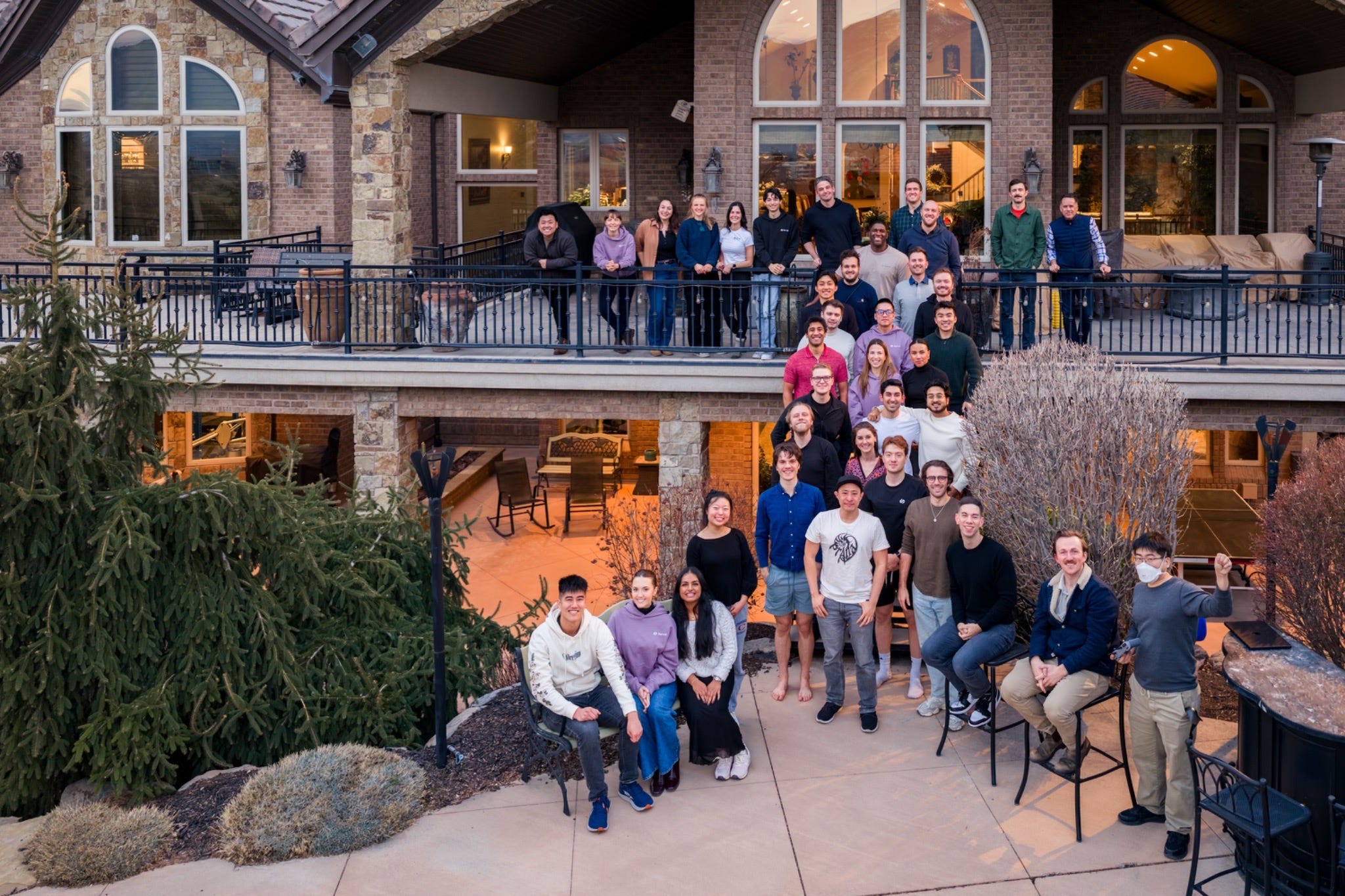
Co-founders Alex and Jake, along with founding engineer Sebastien deGroot, worked together at Verkada doing all sorts of automation (among other things). “When Jake and Alex left,” Sebastien said, “the cultural shift was obvious. We stayed in touch, and about six months later I visited them in a small WeWork to see what they were building. It already felt like a novel product with real potential.” Serval’s COO, Tatiana Birgisson, did not work at Verkada but previously led growth at Rippling. It’s certainly a confidence-inspiring lineup.
When I talked with the rest of the team (who seem equally impressive) about work at Serval, it quickly became obvious that this is an opinionated company where you can expect to work really hard, even by startup standards.
For one thing, there are no product managers, Sebastien told me, with Serval opting for the Palantir-esque model of hiring forward-deployed engineers that build product through direct customer feedback. This is part of why, as engineer Derek Zheng said, “customers can expect turn-arounds on feature feedback within the same week and, often, the same day.”
Of course, working at a place where customers can expect turnarounds on feedback within the same day is an intense experience. Spencer Lang, an FDE at Serval, told me that his first week he was “immediately thrown into customer calls and shipped core features like emails from our workflow builder and our Crowdstrike integration.” The second week of work at Serval, he said, the company became a unicorn.
Practically-speaking, you can expect to work long days and—according to a few people I talked to—sometimes weekends. “It is NOT a traditional 9-5,” Helen Taylor, a mid-market AE, said. “Anyone who needs structure and concrete processes may not enjoy working here.”
Everyone I talked to said they worked for at least 10 hours a day, and the most dramatic answer was pretty succinct: “I work 15 hours a day because I love it.”
This isn’t to say that you will work 15 hours a day and weekends if you join Serval. But I doubt it’s the right place to go if you are in a four-hour work week era of your life. You will work hard here!
Luckily, you will work hard alongside some truly talented people.
Should you join Serval?
“During my last interview,” one engineer told me, “I asked one of our founding engineers why [he joined] Serval. He told me that if he thought he were better than the founders, he would start his own company. This really stuck with me because I thought he was one of the strongest engineers I’d ever met.”
There’s a lot of love at Serval for Jake and Alex and the team they’ve hired so far, and so one reason you might join is because you feel like the engineer in Spencer’s quote: I trust these people to run a great company more than I’d trust myself.
You might also join because enterprise automation (despite sounding like a buzzword) is actually quite important. On the human level you are saving IT people and legal people and HR people from doing tedious manual work. And on the business level you are helping companies pay people to do more valuable, higher-leverage work, which helps them grow faster.
If you are convinced (or semi-convinced) that Serval is going to achieve even a fraction of its grand vision, then now is the time to join. There is no better time to get equity in Serval than now—a phrase that will be true for as long as the company continues doing well—and they are early enough that an exit or liquidity could result in life-changing money for you. (This is often less true for joining a startup at ~Series D and beyond unless something crazy happens.)
Finally, I think you might join so that you can help realize a new version of that quote:
“Hello, IT. Don’t worry. Serval will take care of it.”
You can browse Serval’s open roles here.
Thanks to Serval for supporting Next Play and making this Spotlight possible.