

✨ Hey there - this is a free edition of next play’s newsletter. This is part of our series Should You Join, where we go behind the scenes on interesting companies. Our hope is that documenting these sorts of details, which never really make it to big publication press releases, can help you a) discover more interesting opportunities and b) inspire you to think creatively (for any of your own endeavors). You can join our private Slack community here and access $1000s of dollars of product discounts here.
Picture a time-traveling software engineer from 2100 getting sent back to the early 2000s. Just like in one of those movie scenes where the person isn’t sure precisely what era they’re in, the time traveler finds a businessman walking down the street and starts asking questions…
Time Traveler: “Hi, weird question, but - do humans do most of the work at your company? Are they the ones who interact with the software? Use the APIs? Build the tools?”
Businessman: “Obviously. Who else?”
Back then, it was obvious that humans did the work. And companies designed their workflows and software around that fact. Internal IT and software approvals and access controls were built with the assumption that humans would be using the software. API documentation and SDKs were created knowing that human software engineers would interact with them by hand.
The first iteration of Speakeasy, the company we are writing about today, proved extremely useful in that version of the world. You gave your API spec to Speakeasy and it auto-generated a powerful up-to-date SDK, in many languages and with all the bells and whistles. The alternative was doing it all by hand, often poorly. Speakeasy’s API platform remains a helpful tool for many companies like Vercel, Redis, and Google even today. (Humans aren’t dead!)
But the world is changing fast. Nearly everyone is using AI. The entities interacting with your product and API are increasingly AI agents, not software engineers. And the entities carrying out tasks at your company, with access to your internal systems, passwords, and the like, are increasingly AI agents directed by your own human employees.
This version of the world creates new problems. Problems that, according to Speakeasy, require a new approach to solve: an “AI control plane.” That’s what Speakeasy is building now.
…But what exactly is an AI control plane? How do companies use it? What’s the trajectory for Speakeasy? And what kind of person should consider joining? That, and more, below.
The product
My summary of Speakeasy’s pitch today is that it is the way for you (a company) to control the way AI interacts with your business. This works in both directions: you can manage the way AI agents interact with your product, and you control what AI agents can do inside of your company. The former is basically an extension of Speakeasy’s API platform product; it is another way to make sure customers can use your API effectively.
But the internal control product is different and has a wider net of potential customers. It’s also seemingly the vision that Speakeasy’s ‘AI control plane’ pitch is all about.
It is not hard to picture the basic problem. Companies, especially larger ones, are having AI control issues. One day you had a clear-ish way to keep track of all of the humans at your company doing work, and the next, all of those humans have their own armies: 100s of AI agents and tools doing who-knows-what inside your organization and your systems.
This creates security issues. It creates compliance issues. It creates quality issues. It creates oversight issues. A real company of any substantial size needs to have controls (like access and identity) in place. There need to be rules about what systems are available to whom, and how they should be used. There needs to be oversight of the work that’s being done. And all of this needs to be enforced, unilaterally if possible, across the organization!
(Also: control needs to happen without impacting the end user experience. Nobody wants a slow or interrupted Claude session for some ‘governance’ reason.)
There is no good solution today at most larger startups and enterprises. Often, they take extremely strict approaches, blocking all (or most) AI and taking a limited view on what people can use. The downside here is that there are 100s of useful tools your team is blocked from using simply because you don’t have a way to control them. Other teams take more permissive, but asymmetrical, approaches: one person might get approval for something quickly while someone else is stuck waiting for 3 months, their ticket lost to time. It is a mess.
Speakeasy solves this by bringing all of this AI activity through one door.
Your company starts by routing AI access through Speakeasy’s gateway. Instead of every employee wiring Claude or Cursor up to tools on their own, IT connects the tools once: pre-built connectors for things like Salesforce, Slack, and HubSpot, plus your internal APIs, which Speakeasy turns into agent-usable tools from your API spec. The gateway plugs into your login system (Okta, Entra, etc.) so every action is tied to an identity.
IT sets the rules from there. Engineers’ agents can reach GitHub and Linear. Finance’s agents can reach billing. Nobody can touch HR data. Credentials stay vaulted. Employees can now finally use AI with far greater breadth and depth than they could before, and most of the risks formerly posed to their company disappear.
As one example: Fermat, an AI commerce startup that is one of Speakeasy’s customers, took this idea pretty far. Employees stopped opening SaaS dashboards at all and now just ask Claude, which does the (approved and controlled!) work through Speakeasy’s gateway.
And this works at much larger scale, too. MoonPay, the crypto payments company, runs its AI usage through Speakeasy’s control plane: some 32,000 sessions governed, 1 million tool calls, and 50 billion tokens observed and secured, every month.
The strategy
One year ago, Speakeasy was a developer tooling company. Today, in addition to those tools, it sells AI infrastructure to IT and security teams. What does that tell us about the long-term strategy? “We move fast and we take big risks,” Katrina Sanzi, Head of Sales at Speakeasy, said. “We went from being a pure devex company to building an AI control plane in a matter of months because our engineers and leaders saw the problem emerging and committed to it.”
It’s a more ambitious pitch than Speakeasy’s original scope. And, if it works out, Speakeasy has the opportunity to become a generational kind of company. “In 20 years,” Speakeasy’s co-founder and CEO Sagar Batchu said, “[we are] foundational AI infrastructure for every business across several verticals… We are a $100B+ business scaling as AI usage scales. We have multiple HQs across SF, NYC, London, and probably Asia, too… I expect by then we will be well past purely security and governance but also building and providing models with stronger enterprise guardrails baked in.”
There’s good reason to believe that this potential for this new AI control plane idea is rather large. Every company that adopts AI at any scale is going to hit the problem Speakeasy solves. And whoever ends up governing how agents touch enterprise systems will be in a pretty valuable place. Speakeasy, if successful, could win that position.
Sagar also told me that, in his version of the future, Speakeasy will still be engineering-led with “a strong emphasis on research, craft, and setting the bar in the industry for talent density.”
Speakeasy is not the only company in this category, of course; plenty of startups are realizing that security and governance for AI is a big deal, especially at the enterprise level. There’s a lot of money in that. And Speakeasy has competition. But, according to Sagar, part of the case for winning comes down to the company’s background: “We come from a DNA of building dev tools and are now selling to IT and security,” he said. “This means we have a unique advantage of having well-crafted product, which has traditionally not been an option for these buyers.”
And if you’d like something else to give you confidence about Speakeasy, allow me to tell you about their growth metrics and impressive trajectory thus far.
The growth
You could picture a skeptic reading this essay with the following thought: Hmmm. A big ambitious pivot in the span of months. Must be a struggling startup grasping at straws.
I don’t blame the skeptic, and it’s true that sometimes startups follow big vision changes with a ‘we’re closing down’ blog post on the About page a few months later. But you’d be wrong to read this essay and come away with this impression; Speakeasy appears to be in roughly the opposite position:
ARR growth is at 6x YoY
ARR is nearing the double-digit millions
They’re preparing for a Series B
They’re not losing money (break even) (!)
In other words, since raising their $15M Series A in 2024 (and arguably before it), Speakeasy has been on a tear. Few other Series A startups can claim these kinds of revenue numbers, and even fewer can say they are not losing money.
This feels like a picture of a company that pivoted from strength rather than desperation. The SDK/API platform business was a strong start; it gathered credibility and cash, and it remains a valuable product for the many customers who use it. Taking the next step for an AI control plane to conquer an even bigger market, then, is something that’s only been made possible by the team’s success so far. It’s a confident bet, and it’ll be interesting to see where Speakeasy goes from Series B and beyond.
The team and culture
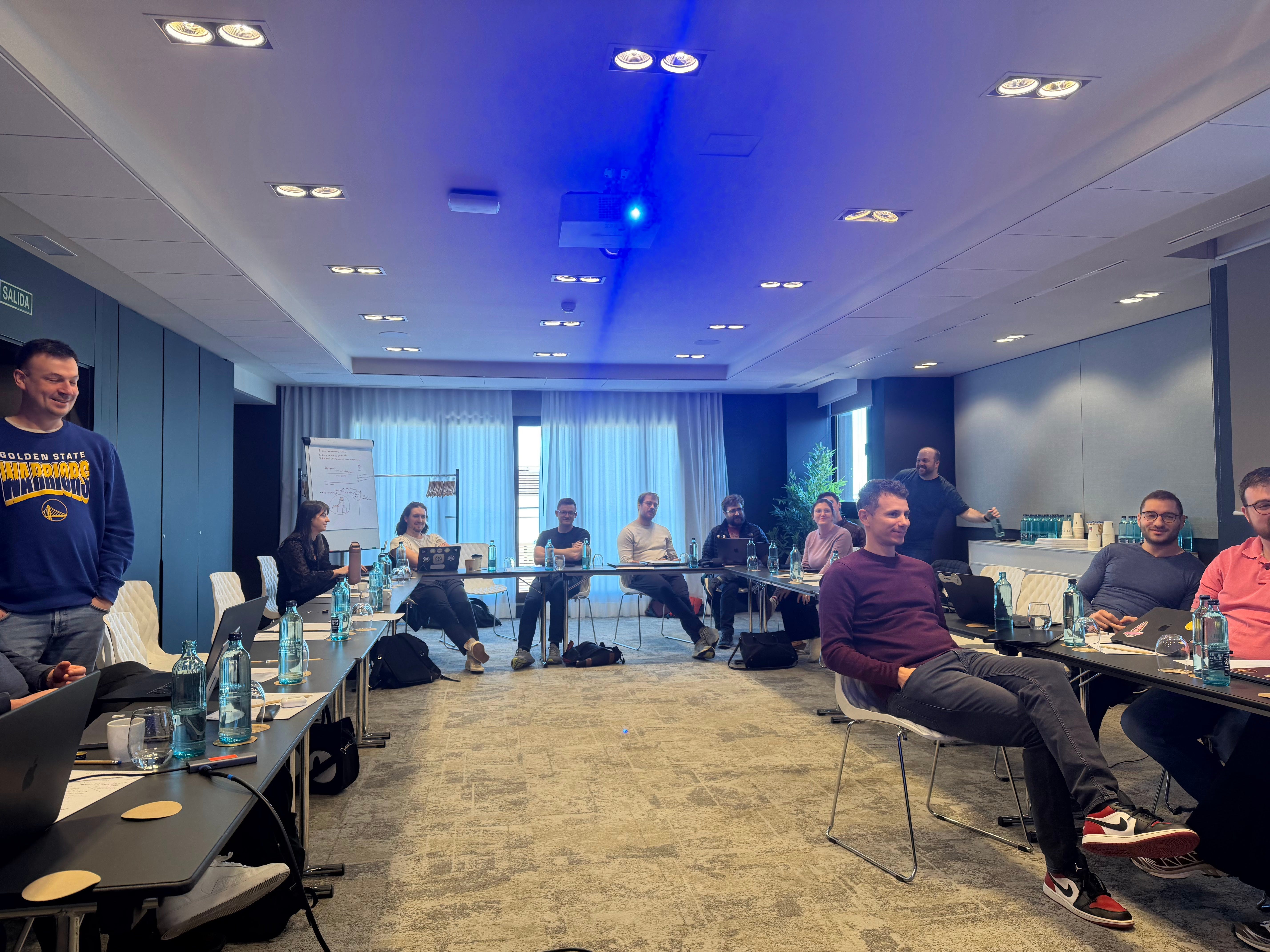
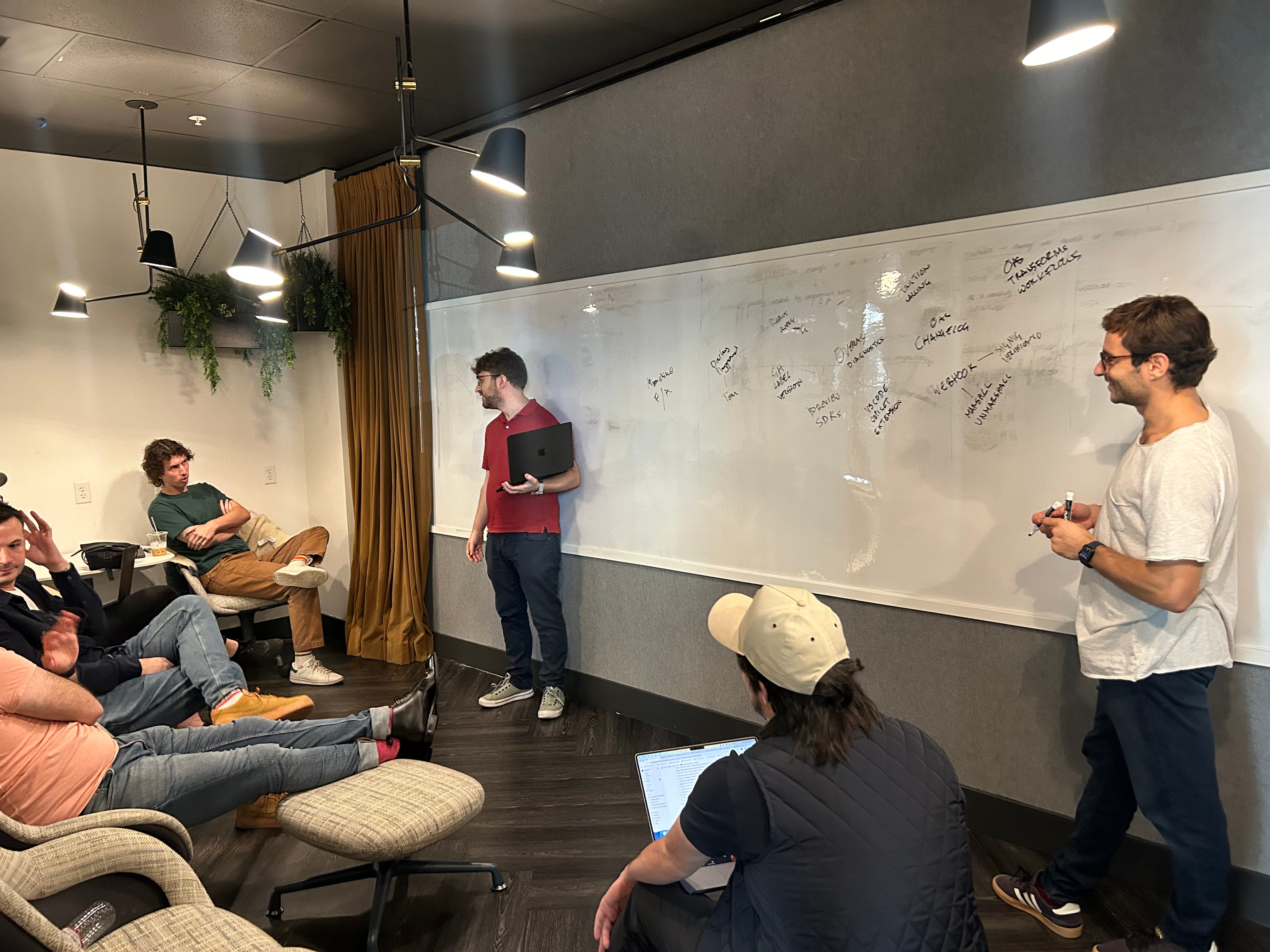
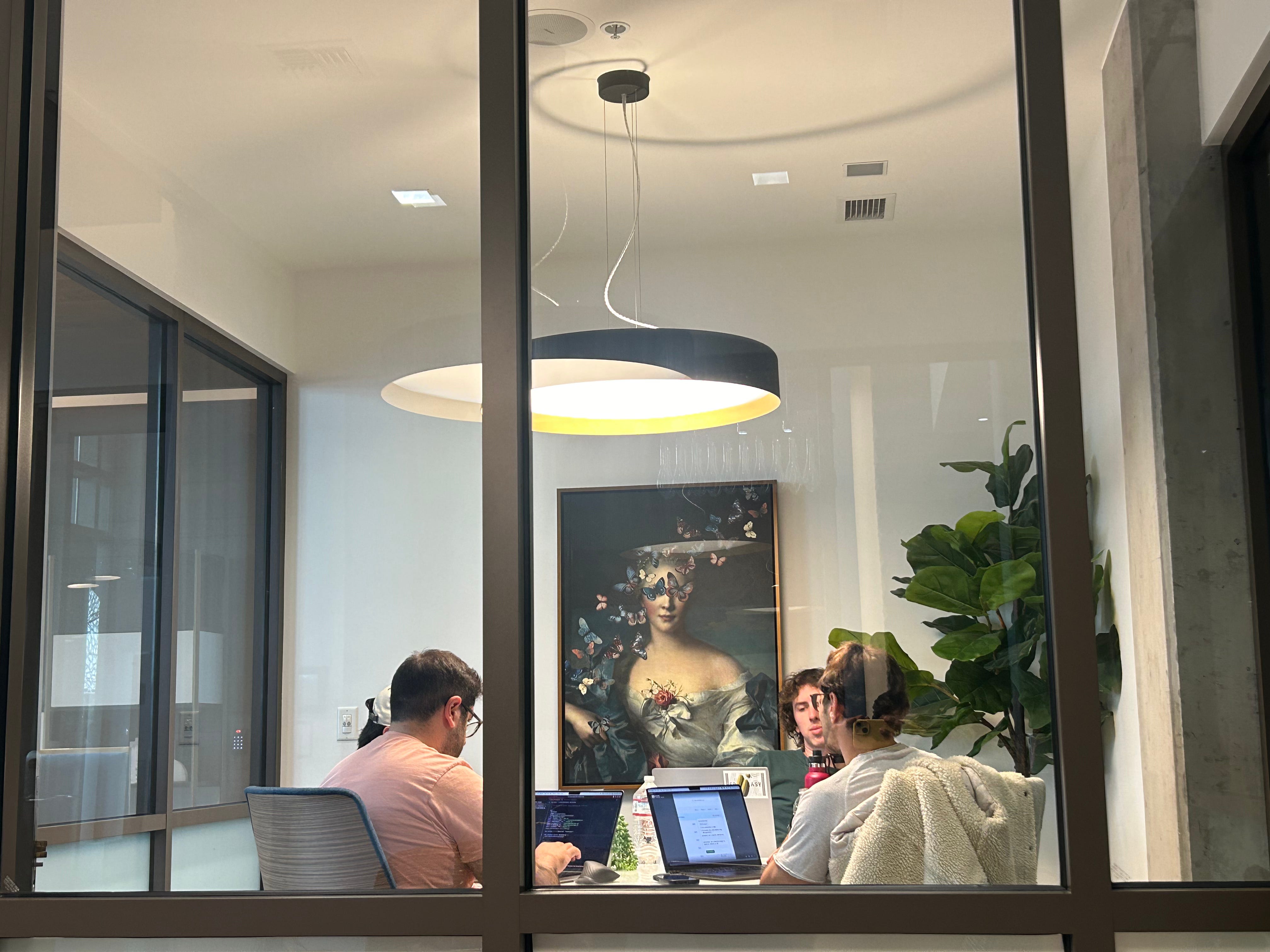
Speakeasy is a small team as of today, about 30 people, mostly in San Francisco and London. There are no product managers here (at least not yet), and there is no top-down roadmap. Engineers own the product. This is one of the company’s more unpopular takes.
“Siloes are good,” Sagar said. “Engineers need to go deep and become domain experts. That’s part of what we offer to customers.” So what does this actually mean for the culture?
It’s intense, a founding engineer told me, but not intense in a 996 sort of way (good work-life balance is something I heard from multiple people). “The type of ‘intense’ we are stems from having a team full of senior ICs who’ve been given the autonomy to shape the product. So there’s a need to convince other, very knowledgeable people that your idea should win out, should be prioritized, and have a big impact. We don’t have a CEO-mandated roadmap.”
You get this autonomy fast. During his first week, Brad Cypert (a product engineer) asked someone how a feature should behave. They asked him: “How do you think it should work?” And during her first week, Speakeasy’s first salesperson Katrina Sanzi found herself “spending three days at a conference pitching a product I barely knew [at the time].”
A culture as flat and self-directed as this one can break down if people aren’t very good or don’t know what they’re doing. So it probably helps that a lot of the people at Speakeasy have run things before. “Many of our team members have owned and run businesses,” Sagar told me. “Be it a bootstrapped dev tool, YC company, a curated plant delivery business, or selling custom made Game Boys.” People at Speakeasy are used to running things for themselves, and that sense of ownership is generally what they look for when bringing new people on.
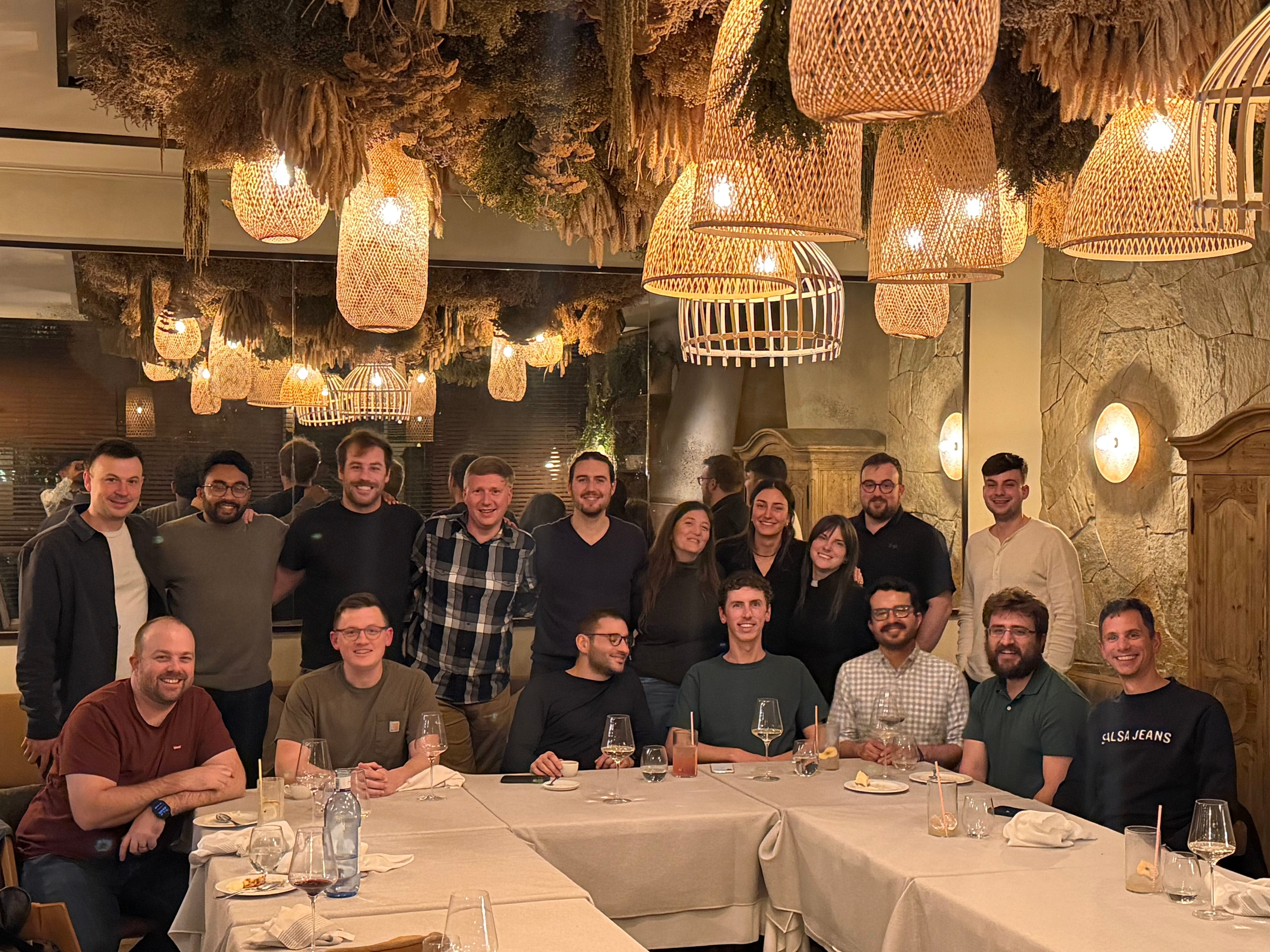
And many people told me that the company cares about you as a real person. During a UK heatwave, Sagar told folks in London to rent air-conditioned coworking space and expense it. Growth engineer Cameron McClellan said his most recent 1:1 happened over a Guinness, watching the World Cup with his manager. “The culture is not performative,” Cameron said. “Work-life balance is genuine. The company is busy, but doesn’t glorify it.” There are also, Katrina Sanzi said, lots of team dinners and outings (not required, but always recommended).
Should you join Speakeasy?
You could start by considering Sagar’s pitch: “Come work at Speakeasy if you want to solve hard problems for your customers… We’re an engineering-first, talent-dense team based in SF and London. We love crafting product but also staying practical about what it takes to build a meaningful, durable, and sustained business. We’re at a pivotal ‘why now’ moment in the business with revenue, customers, and mandate growing faster than we can address.”
If that sounds exciting, then consider whether you are the type of person the team is looking for. “Staff engineers who are used to having product requirements handed to them or who are used to having a team of minions to direct won’t thrive here,” one of Speakeasy’s founding engineers said. And I think that applies to the rest of the team, too: if you are productive and self-directed, you may have a good time at Speakeasy. Perhaps less so if you need a 90-day roadmap.
“The leadership team told me clearly that they are focused on building a stable, profitable business that out-executes competitors,” Cameron (growth engineer) said. This is rather different from the ‘hypergrowth at all costs’ pitch you often hear from startups. I often hear from people who are tired of joining what they perceive as overly irresponsible or risky startups; if you are one of those people, Speakeasy may be worth investigating.
I’d also remind you that Speakeasy is, at the time of this writing, still at Series A (pursuing a Series B). Beyond everything the team says about the culture, and what customers say about the product, the metrics on paper beat most of their peers. If the team achieves even a fraction of their grandest vision, today would still be quite early in the lifetime of Speakeasy.
“Some of the best hires on the team have been emails directly to me or other team members,” Sagar said. “We’ve also recruited folks based on engaging Github issue conversations or HN threads.” If you think you belong at Speakeasy, say so.
Thanks to Speakeasy for supporting Next Play and making this essay possible.
As an Indian financial planner, I see parallels between Speakeasy's pivot and career decisions.
Joining early means equity upside, but only if the company survives. Speakeasy's metrics are strong, but the pivot adds risk.
For Indian tech professionals, timing matters: late-stage startups with clear revenue are safer bets unless you have high risk tolerance.